QuantDinger
Self-host an AI-powered platform for quantitative trading research, strategy development, backtesting, and live execution on your own infrastructure.
The gist
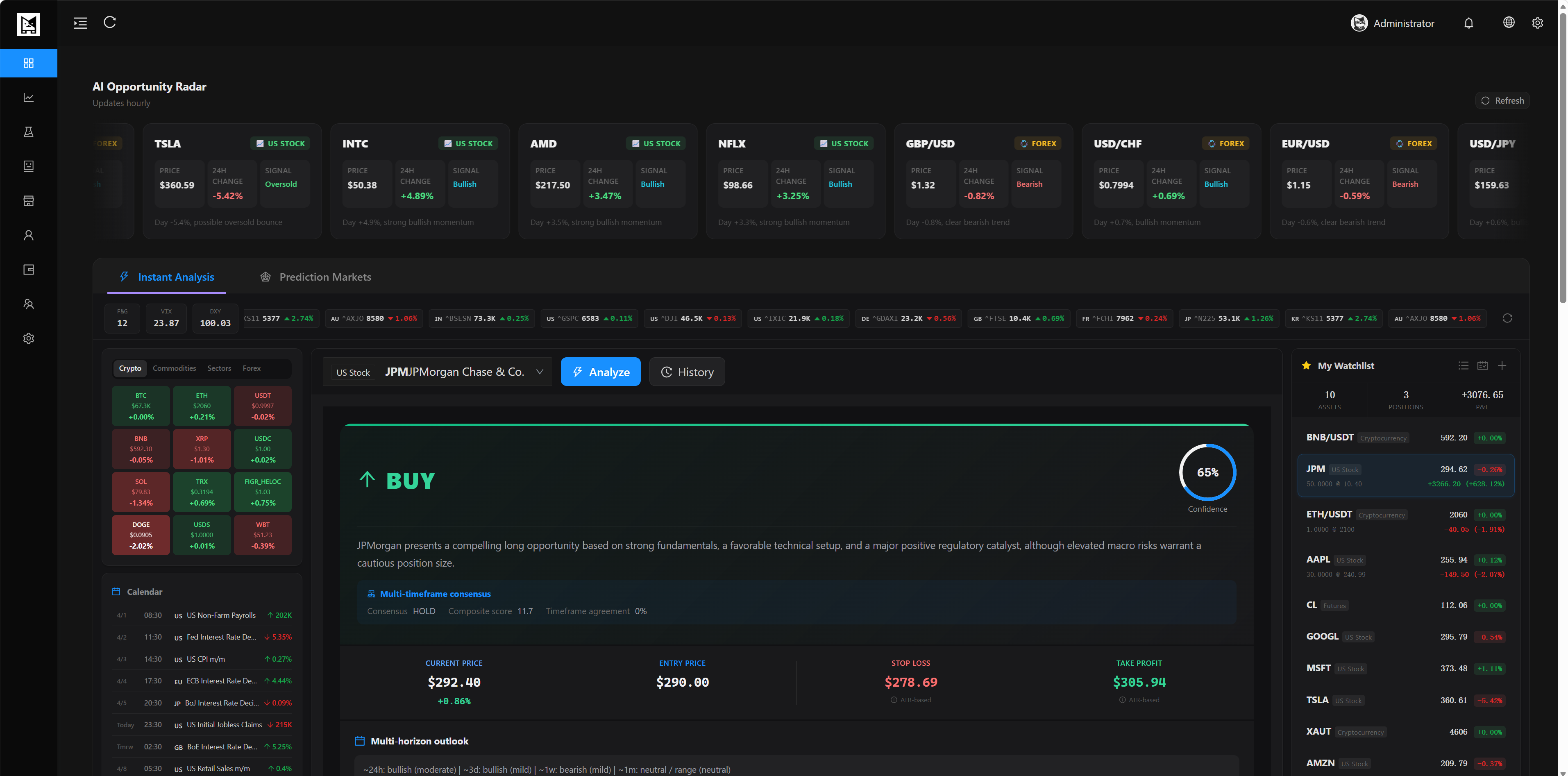
QuantDinger is a self-hosted, local-first quantitative trading platform for AI research, strategy development, backtesting, and live execution. It provides a single system for quants and developers who want to combine AI-assisted market analysis with Python-native strategy coding. The platform unifies the entire trading workflow—from research to live operations—on infrastructure that the user controls, solving the problem of fragmented, multi-tool setups and offering a stack with user management and billing.
What it does
- Run AI-driven market analysis on crypto, stocks, and forex using multiple LLM providers.
- Generate and refine Python trading strategies and indicators from natural language prompts.
- Backtest trading strategies against historical data, storing results and performance metrics.
- Connect to multiple crypto, stock (IBKR), and forex (MT5) exchanges for live trading execution.
- Deploy and monitor automated or semi-automated trading bots on private infrastructure.
- Manage multiple users with role-based access, system credits, and USDT payment flows.
How it works
QuantDinger is a self-hosted application deployed via Docker Compose. It combines a Vue frontend with a Python/Flask backend, PostgreSQL, and Redis. Users connect their exchange or broker APIs, then write Python strategies directly in the IDE or generate them using natural language with an integrated LLM. The platform outputs backtest reports, chart visualizations, and executes live trades. The backend is Apache 2.0 open-source, but the frontend requires a separate license for commercial use.
Best for
QuantDinger is best for quantitative traders and Python developers who want to build, backtest, and deploy trading strategies on their own private infrastructure. It is an ideal choice for teams seeking a unified platform that combines AI research tools with live execution.
Watch out for
While the backend is open-source under Apache 2.0, the frontend source code has a separate source-available license that requires purchasing a commercial license for any commercial use.