Mission Control
Orchestrate, monitor, and secure AI agent fleets with a self-hosted dashboard.
The gist
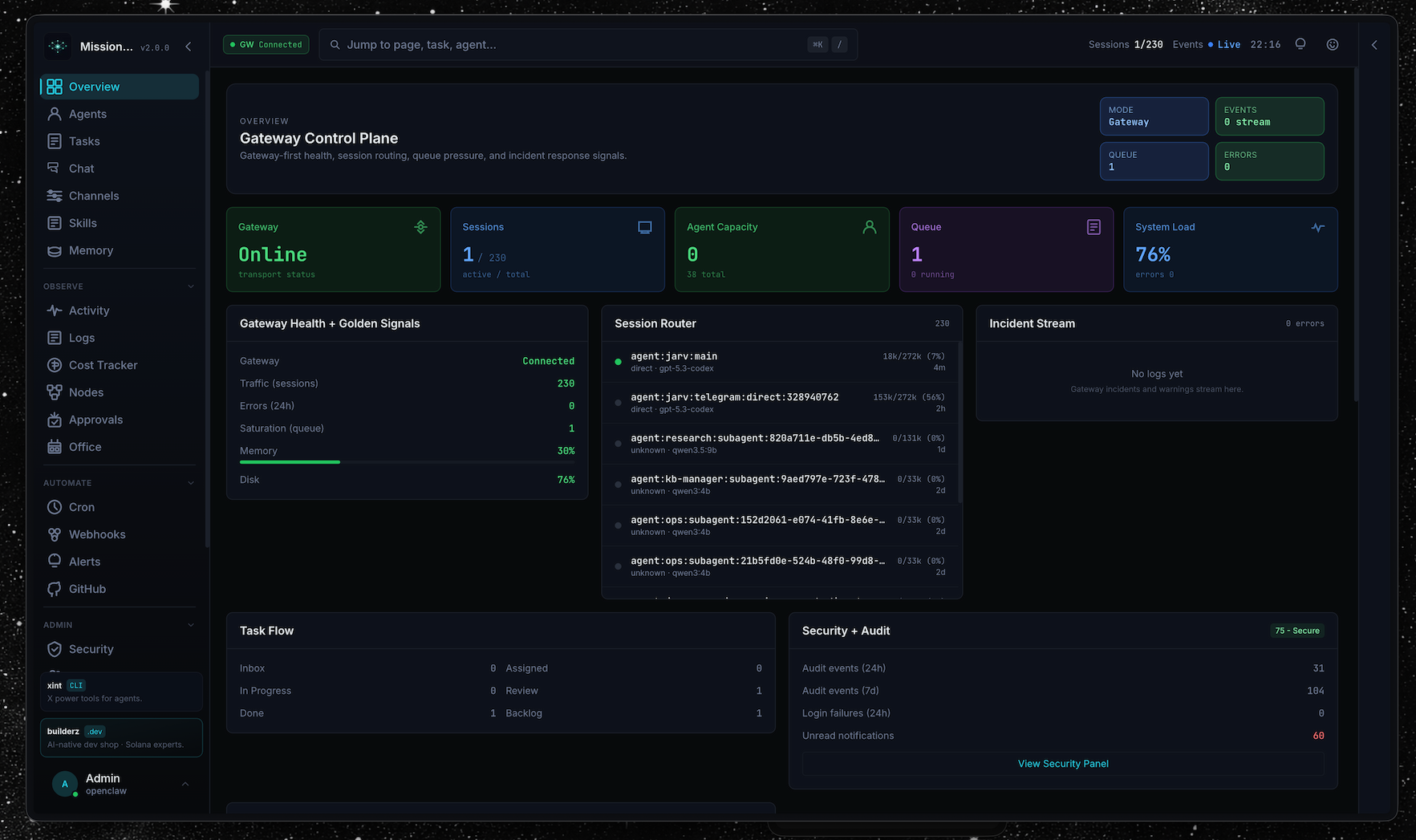
Mission Control is an open-source dashboard for AI agent orchestration built by Builderz Labs. It helps development teams manage fleets of AI agents by providing a central interface to dispatch tasks, track token costs, and coordinate complex multi-agent workflows. The tool is designed to run self-hosted with zero external dependencies, offering a comprehensive solution for agent management and observability without needing to integrate multiple separate tools.
What it does
- Manage AI agent lifecycles, from registration and status monitoring to retirement.
- Dispatch tasks and coordinate multi-agent workflows using a Kanban-style board.
- Track token usage and costs with a dashboard featuring per-model breakdowns and analysis.
- Browse, install, and security-scan agent skills from local or external registries.
- Audit agent activity with real-time security scoring, secret detection, and trust monitoring.
- Schedule recurring tasks using natural language expressions like "every morning at 9am".
How it works
Mission Control is a self-hosted Next.js application that runs using a single command or Docker. It operates with a built-in SQLite database, requiring no external dependencies like Postgres or Redis. Users interact with a web dashboard to manage agents and tasks connected via framework adapters for systems like CrewAI or LangGraph. The project is open-source, and all functionality is also exposed via a REST API for headless operations.
Best for
This tool is best for development teams who need a self-hosted, all-in-one dashboard to orchestrate, monitor, and secure their fleet of AI agents without relying on external services.
Watch out for
The project is explicitly marked as Alpha software, meaning APIs, database schemas, and configurations may change without warning between releases. Users should carefully review the security documentation before deploying in a production environment.